 English


Search
TPU lamination film is generally the better choice for high-performance laminated glass and advanced applications due to its superior adhesion, elasticity, impact resistance, and long-term durability. PVC lamination film, however, remains a cost-effective option for standard or low-demand applications where flexibility and environmental resistance are less critical.
The right choice depends on your end-use requirements—whether you prioritize safety, durability, clarity, or cost efficiency.
TPU lamination film is a thermoplastic polyurethane-based interlayer material widely used in laminated glass, automotive glazing, architectural safety glass, and specialty applications.
A tpu lamination film functions as a high-performance interlayer, often referred to as a tpu interlayer, bonding multiple layers of glass or other substrates through heat and pressure. Compared with traditional materials, TPU offers enhanced mechanical strength and flexibility.
Key characteristics of tpu film lamination include:
Excellent elasticity and elongation
Strong adhesion to glass, polycarbonate, and metals
High impact resistance (anti-penetration performance)
Superior weather and UV resistance
Long-term durability without yellowing
In demanding environments, tpu film laminate structures maintain integrity even under extreme stress, making them suitable for bullet-resistant glass, smart glass, and advanced architectural glazing systems.
PVC lamination film is based on polyvinyl chloride and has been widely used as a traditional interlayer material in laminated glass and decorative panels. It is known for:
Low material cost
Easy processing and lamination
Good optical clarity (initial stage)
Adequate flexibility for general applications
However, PVC films tend to have limitations in long-term performance, especially under UV exposure, humidity, and temperature fluctuations. Over time, PVC laminates may experience:
Yellowing or discoloration
Reduced adhesion strength
Plasticizer migration
Lower impact resistance compared to TPU
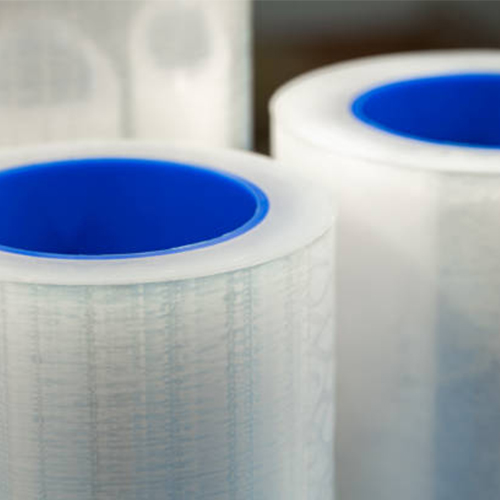
TPU demonstrates significantly stronger adhesion across various substrates.
TPU laminate: High bonding strength, minimal delamination risk
PVC film: Moderate adhesion, higher risk of edge bubbling over time
For safety-critical laminated glass, adhesion is not optional—it’s essential.
TPU is engineered for high-impact environments.
TPU interlayers absorb and dissipate energy effectively
Maintains structural integrity after breakage
Ideal for safety glass, automotive, and security glazing
PVC, on the other hand, offers limited impact resistance and is less suitable for applications requiring high safety standards.
TPU has superior elongation and flexibility.
Maintains elasticity across a wide temperature range
Prevents cracking and brittleness
Suitable for curved or complex laminations
PVC becomes brittle over time, especially in low temperatures.
This is where TPU clearly outperforms PVC.
TPU resists UV radiation, moisture, and temperature cycling
Long lifespan without yellowing
Maintains transparency and mechanical properties
PVC films are more prone to:
UV degradation
Yellowing
Plasticizer loss
Both materials can offer good transparency initially, but long-term performance differs:
TPU maintains clarity over time
PVC may lose transparency due to aging and environmental exposure
For premium glass applications (e.g., architectural facades), TPU is preferred.
PVC still has an advantage in cost and ease of processing.
Lower raw material cost
Easier lamination process
Suitable for price-sensitive markets
TPU:
Higher material cost
Requires more precise lamination conditions
Delivers significantly higher performance value
High safety performance (impact-resistant glass)
Long-term durability and weather resistance
Advanced applications (automotive, aerospace, smart glass)
Strong adhesion across different materials
Lower upfront cost
Basic lamination requirements
Indoor or non-critical applications
In most industrial and high-end markets, tpu laminate solutions are replacing traditional PVC films due to performance advantages.
Yes, TPU is better for laminated glass when safety, durability, and long-term performance are priorities.
TPU interlayers provide:
Higher penetration resistance
Better post-breakage integrity
Longer service life
PVC may still be used in decorative or low-risk applications, but it does not meet the requirements of modern safety glazing standards in many cases.
TPU film lamination is widely used in:
Automotive windshields and side windows
Bulletproof and security glass
Architectural curtain walls
Smart glass and functional laminated panels
Solar panels and specialty composites
Its versatility makes it a preferred material in industries requiring both performance and reliability.
In many advanced applications, yes.
While PVB and PVC still dominate cost-sensitive markets, TPU is increasingly used where:
Higher mechanical strength is required
Multi-material bonding is needed
Environmental resistance is critical
TPU is not just an alternative—it is often an upgrade.
From an industry perspective, the answer is yes—when performance matters.
Although the initial cost of tpu lamination film is higher, it offers:
Reduced maintenance and replacement costs
Improved safety compliance
Better long-term optical and structural performance
For manufacturers and project owners, this often results in a lower total cost of ownership.
TPU lamination film stands out as the superior solution for modern laminated glass applications, offering unmatched performance in adhesion, impact resistance, and durability. PVC lamination film still holds value in cost-sensitive or low-performance scenarios, but its limitations make it less suitable for demanding environments.
If your goal is to deliver high-quality, long-lasting laminated products, investing in tpu film laminate technology is a strategic decision that aligns with both market trends and performance expectations.
TPU interlayers provide higher strength, elasticity, and durability, while PVC films are more economical but less resistant to environmental and mechanical stress.
Yes, TPU’s flexibility and elongation make it ideal for curved and complex glass structures.
No, high-quality TPU films are designed to resist UV exposure and maintain optical clarity over long periods.
Yes, TPU performs exceptionally well in outdoor environments due to its resistance to UV, moisture, and temperature changes.
TPU involves more advanced material engineering and delivers significantly higher performance, which justifies its higher cost.