 English

Search
Choosing the right interlayer film is one of the most important decisions in laminated glass design because the interlayer directly affects safety, impact resistance, optical performance, durability, acoustic behavior, and the way the glazing performs after breakage. In professional Glass Lamination, different projects may require very different properties, so the best choice depends on the glass structure, application environment, required safety level, processing method, and expected service life.
For buyers, processors, architects, and glazing manufacturers, understanding the differences among common interlayer films can help avoid problems such as poor adhesion, delamination, insufficient rigidity, optical distortion, or unsuitable post-breakage performance. This is particularly important in industrial Glass Processing, where material selection and lamination conditions must work together to achieve consistent finished-glass quality.
Laminated glass is generally made by bonding two or more glass layers with a polymer interlayer between them. The interlayer keeps glass fragments together when breakage occurs and can also contribute to impact resistance, structural performance, UV protection, acoustic control, and design flexibility. These characteristics are why laminated glass is widely used wherever enhanced safety and post-breakage retention are required.
The interlayer is therefore not simply an adhesive layer. Its mechanical and optical properties influence how the entire laminated glass assembly behaves. A properly selected glass interlayer can affect not only fragment retention but also clarity, stiffness, vibration damping, and long-term durability.
Angle-Tech currently provides several interlayer options, including TPU, SGP ionoplast interlayer, PVB, polycarbonate lamination film, and edge-seal lamination film for different glass applications.
PVB is one of the most widely used materials in architectural and automotive laminated glass. It offers good adhesion to glass and is commonly selected when safety, optical clarity, acoustic performance, and UV protection are important. These characteristics make PVB a familiar choice in many conventional safety glass constructions.
A PVB interlayer film is suitable for a wide range of standard laminated safety glass applications, including automotive and building glazing. Angle-Tech notes that its PVB films are used in construction and automotive applications and can also be manufactured for specialized aerospace, military, and high-tech uses.
PVB is often a practical option when the project does not require exceptionally high structural stiffness or unusual material combinations. It is also widely used where established production methods and predictable lamination performance are priorities.
SGP ionoplast is generally selected where greater stiffness, structural retention, and post-breakage stability are required. Compared with softer conventional interlayers, SGP film is particularly relevant when the laminated panel is expected to retain greater structural capacity after one or more glass plies have fractured.
Compared with conventional interlayers, an SGP interlayer is particularly suitable for structural laminated glass such as glass floors, stairs, large-span panels, railings, façades, canopies, and other applications where higher rigidity is important. Angle-Tech also states that its SGP film is compatible with common architectural glass types and standard autoclave lamination processes.
For exposed-edge or load-bearing glazing, SGP is often considered when residual structural performance after breakage is a key design requirement. An Ionoplast interlayer may therefore be specified in demanding architectural projects where post-breakage stability, edge durability, and stiffness are more important than in conventional laminated assemblies.
TPU is valued for flexibility, strong adhesion, impact resistance, puncture resistance, and the ability to bond dissimilar materials. These characteristics make PU interlayer film and TPU-based lamination technologies useful for specialized composite glazing where conventional glass-to-glass bonding is not the only requirement.
A TPU interlayer can bond not only to glass but also to polycarbonate, PMMA, PET, ceramics, and other materials. This makes TPU especially useful for composite structures, transportation glazing, aerospace applications, armored protection, and impact-resistant laminated glass.
Angle-Tech also states that its TPU-based safety glass can maintain performance at temperatures down to -60°C, which makes it relevant for demanding low-temperature applications. Such performance can be important where environmental durability and material flexibility must be maintained under extreme service conditions.
The application should be the starting point because different projects place different demands on laminated glass. Rather than choosing a polymer only by material name or price, buyers should first identify the required safety, structural, optical, environmental, and processing performance of the finished glazing.
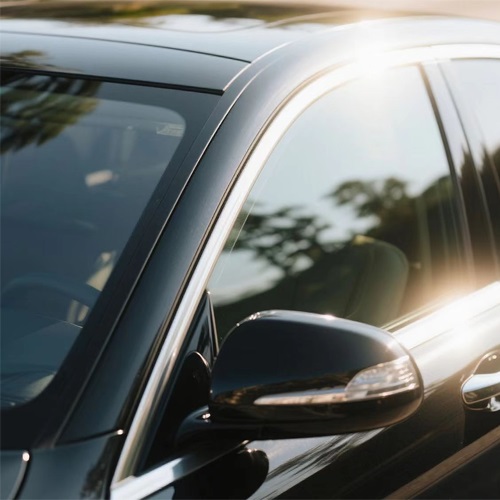
Automotive glazing normally requires strong adhesion, optical clarity, impact retention, UV protection, and reliable long-term performance. The interlayer also plays an important role in maintaining fragment retention and visual quality after the glass has undergone the required Heat Treatment of Glass / Tempering or other manufacturing processes used in the overall glazing system.
For windshields and other automotive advanced interlayers, PVB remains common, while TPU may be considered for applications requiring stronger impact resistance or hybrid bonding with materials such as polycarbonate. Angle-Tech notes that automotive laminated glass performance depends heavily on interlayer selection, including optical, impact, acoustic, and durability requirements.
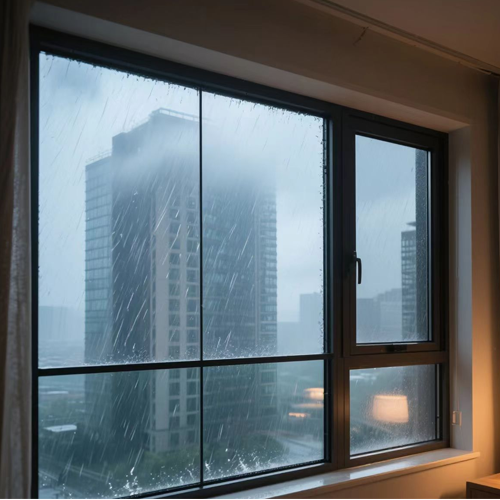
Architectural projects may require transparency, structural strength, weather resistance, edge stability, or larger panel sizes. These requirements vary significantly between conventional windows and demanding architecture glass applications such as façades, balustrades, floors, stairs, and canopies.
PVB can be suitable for conventional laminated building glass, while SGP is more appropriate for structural applications where greater stiffness and post-breakage integrity are required. Angle-Tech describes advanced architectural interlayers as engineered polymers that help strengthen glass against impacts, seismic loads, and environmental forces. In large Facade Glazing systems, the interlayer should therefore be evaluated together with the glass thickness, support conditions, framing system, and expected structural loads.
Safety glazing must control glass fragmentation and reduce the risk of dangerous fallout or penetration. The interlayer helps retain broken fragments within the opening and therefore contributes directly to the post-breakage behavior expected from laminated safety glass.
Depending on the protection level, PVB, TPU, or SGP may be selected. TPU is particularly useful when penetration resistance, flexibility, and composite bonding are important, while SGP can offer higher rigidity and residual structural support.
Angle-Tech's safety glass solutions use different interlayer types for impact, forced-entry, structural, and security applications. For more demanding constructions, an SGP Ionoplast Interlayer for Structural Laminated Safety Glass may be evaluated when both fragment retention and post-breakage load support are important.
When appearance, color, embedded materials, privacy, or design flexibility are important, interlayer compatibility with decorative elements becomes a major consideration. This is especially relevant in Decorative Glazing, where visual quality must be maintained together with adhesion and safety performance.
Some interlayers can support custom colors, patterns, fabrics, printed layers, or functional components while maintaining laminated glass safety performance. The compatibility of inks, fabrics, coatings, meshes, or other inserts with the selected interlayer should always be confirmed before production.
When selecting an interlayer film, buyers should compare more than price. The complete glazing configuration, processing conditions, required service environment, and applicable standards should all be evaluated before a final material is selected.
The film must bond reliably to the selected glass or substrate. This becomes especially important when laminating glass with PC, PMMA, PET, coated glass, or other dissimilar materials. Reliable adhesion is fundamental to the performance of any glass interlayer film, particularly after impact or breakage.
Projects involving transportation, security, ballistic protection, or high-energy impact require interlayers with stronger toughness and penetration resistance. The appropriate construction should be selected according to tested performance rather than assuming that all laminated materials provide the same level of protection.
Large panels, railings, floors, façades, and overhead glazing may require greater shear stiffness and post-breakage support. In these applications, an Ionic Interlayer such as SGP may be considered where higher rigidity is needed compared with conventional PVB systems.
High transparency, low haze, and consistent appearance are essential for windshields, façades, display glazing, and other visually sensitive applications. For demanding structural glazing where optical clarity is also a priority, an SGP Ionoplast Interlayer (Super Clear) may be evaluated according to the required laminated construction.
Temperature, humidity, UV exposure, chemicals, and exposed edges can influence long-term interlayer performance. These factors are particularly important in exterior façades, canopies, balustrades, transportation glazing, and other applications exposed to changing environmental conditions.
The interlayer must match the processor's equipment, including vacuum systems, rollers, autoclaves, temperature control, and pressure conditions. Even a high-performance SGP interlayer or specialty polymer can produce poor results if moisture, de-airing, temperature, pressure, or storage conditions are not correctly controlled.
There is no single interlayer that is best for every laminated glass project. The most suitable material depends on the safety, structural, optical, environmental, and processing requirements of the finished glazing.
PVB is often the most practical choice for standard architectural and automotive safety glazing, particularly where optical clarity, fragment retention, established processing, and acoustic performance are required.
SGP is generally preferred when structural stiffness, load retention, exposed edges, or post-breakage stability are critical. An SGP Safety Glass Plus Ionoplast Interlayer may therefore be considered for structural glazing applications where greater rigidity and residual support are important design objectives.
TPU becomes especially valuable when strong impact resistance, flexibility, low-temperature performance, or bonding between glass and polymer substrates is required. Its compatibility with polycarbonate and other materials makes it particularly useful for specialized multi-material laminates.
The final selection should therefore be based on the finished glazing structure rather than the interlayer material alone. Glass thickness, interlayer type, panel size, support conditions, environmental exposure, and manufacturing process all contribute to the final performance.
Film thickness influences impact performance, bonding behavior, structural response, and final glass design. In some applications, increasing interlayer thickness can improve penetration resistance or provide additional polymer material for energy absorption, but thickness alone does not determine performance.
Thicker interlayers are not automatically better. The correct thickness depends on glass thickness, panel dimensions, support conditions, impact level, load requirements, and applicable standards. For structural applications using SGP film for laminated glass, thickness selection should therefore be based on the complete engineering design rather than on a simple comparison of film gauges.
For structural or security applications, buyers should confirm the final laminated construction with the interlayer supplier and glass processor instead of selecting film thickness only by comparing catalog values.
Before placing an order, confirm:
available film materials and thicknesses;
compatible glass and polymer substrates;
roll width and length;
lamination temperature and pressure requirements;
optical and mechanical test data;
customization capability;
storage and handling requirements;
technical support for trial lamination.
This information helps reduce processing failures and improves consistency when production moves from sampling to larger-volume orders. A reliable laminated glass manufacturer or interlayer supplier should also be able to provide appropriate technical documentation and processing guidance for the intended application.
For buyers sourcing structural ionoplast materials, it is also useful to confirm clarity, edge performance, storage requirements, autoclave parameters, and available test data for the proposed SGP ionoplast interlayer film rather than relying only on generic product descriptions.
An interlayer film is a polymer layer placed between glass sheets during lamination. It bonds the layers together, helps retain fragments after breakage, and can improve safety, impact resistance, sound insulation, UV protection, or structural performance. In this way, the interlayer is one of the key functional components of modern laminated glass.
The best material depends on the application. PVB is widely used for conventional safety glass, SGP is suitable for structural glazing, and TPU is useful for high-impact or multi-material laminated structures. The choice should always be based on the required performance of the finished glazing rather than the polymer name alone.
Yes. TPU can bond glass to polycarbonate and other materials such as PMMA and PET, making it suitable for hybrid laminated structures. This capability is particularly valuable where flexibility and adhesion between dissimilar substrates are required.
SGP generally offers greater stiffness and post-breakage structural stability, making it more suitable for demanding structural glazing applications. An Ionoplast interlayer SGP for laminated glass may therefore be considered for floors, balustrades, façades, canopies, stairs, and other applications where residual structural performance is important.
Selecting an interlayer should begin with the actual performance requirements of the finished laminated glass. PVB, SGP, and TPU each offer different advantages in safety, rigidity, impact resistance, optical quality, and processing flexibility. In structural projects, products such as SGP FILM can provide a different performance profile from conventional PVB, while TPU offers advantages for flexible and multi-material bonding.
By evaluating the application, substrates, structural requirements, environmental exposure, and lamination process together, buyers can select an interlayer that delivers reliable performance throughout the service life of the glazing. This application-based approach also helps processors achieve more consistent results across Glass Processing, architectural, automotive, safety, and specialized laminated-glass projects.